


-
Written ByRebecca Thompson
-
PublishedMay 27, 2026
IT teams, biomed, SPD, perioperative leadership, clinical educators, and frontline staff are all being asked to support increasingly connected environments
Practical Planning to Protect OR Workflow as Demands Continue Growing
Most ORs are being asked to do more than they were originally built to handle.
More cases, more specialties, more vendors, more trays, more equipment, and more technology that need to communicate with everything already in the room.
None of those things is inherently bad. In many ways, they represent progress. New technology has expanded what surgical teams are able to do, supported more advanced procedures, and created opportunities for health systems to grow service lines and increase access to care.
But every addition also creates another demand on the room, the workflow, and the people managing it.
That is where many facilities are starting to feel the pressure.
Is More Better?
New technology expands procedural capabilities, but it also increases IT support needs, integration demands, competency requirements, training expectations, and room-by-room variability. More manufacturers mean more systems to learn, more IFUs to manage, more communication between devices, and more coordination between departments.
None of that means facilities should stop innovating.
But it does raise an important question:
At what point does “more” stop helping workflow and start straining it?
This is one of the reasons interoperability and integration have become such major conversations across perioperative environments.
OR Today recently noted that “interoperability has a long way to go in the perioperative environment because of the vast array of medical devices, surgical equipment, supplies, and technologies utilized in the operating room.”¹
Most upgrades solve a real need. Surgeons need access to advanced technology. Health systems want to support growing procedural demand. Clinical teams want tools that improve care and efficiency.
The challenge is that “more” only works when the environment can realistically support more.
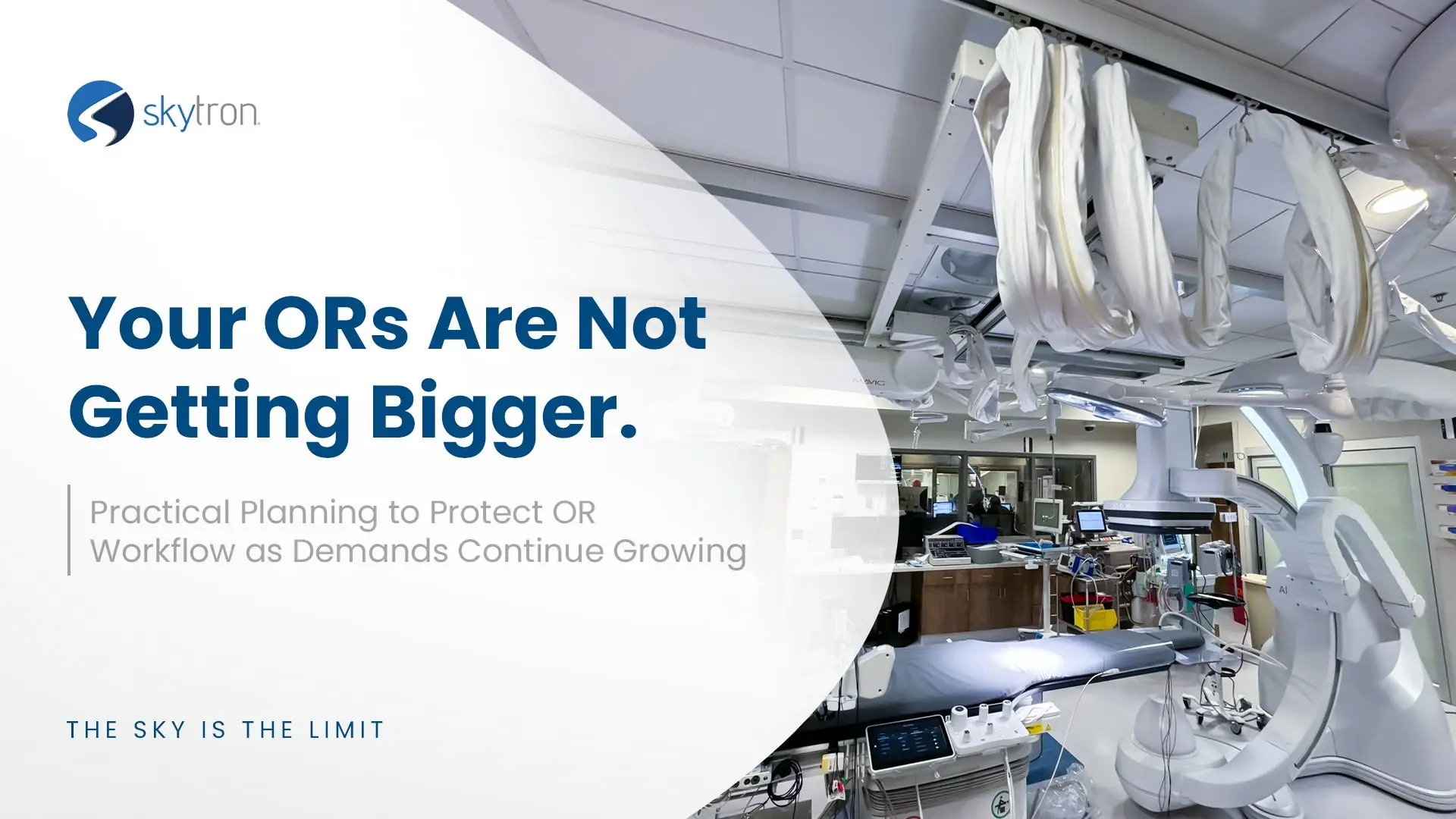
Your Room Is Only So Big
At the same time that everything keeps expanding, the physical space inside many ORs is not.
Every new platform, tower, imaging system, robot, display, or specialty device takes up room. Eventually, teams start running into practical workflow challenges that are difficult to ignore.
- Moving patients
- Positioning equipment
- Bringing in imaging
- Maintaining clear access around the sterile field
- Turning over rooms efficiently
- Making room for vendor support during complex cases
The room itself can start feeling crowded long before the surgical schedule slows down.
When systems are layered over years of upgrades, expansions, and specialty additions, the workflow impact is not always obvious right away. Sometimes it shows up in slower room turnover, inconsistent room setup, troubleshooting delays, increased training demands, or teams spending more time working around technology instead of being supported by it.
Lack of connectivity between systems only adds to that pressure. When devices, platforms, and software do not communicate clearly with each other, staff are often left bridging the gaps manually.
Can You Manage It All?
The advances alone are not the challenge. Managing them is.
That conversation now extends far beyond the OR itself. IT teams, biomed, SPD, perioperative leadership, clinical educators, and frontline staff are all being asked to support increasingly connected environments.
AORN recently highlighted the importance of continuous education as digital platforms, AI-supported tools, and integrated systems continue expanding throughout perioperative care.² AI-guided checklists, predictive software, and monitoring tools may help support perioperative teams and improve efficiency, but they also require training, workflow integration, and trust from the people using them every day.
The same things creating pressure on the room are also helping facilities perform at a level that was not possible years ago.
That is what makes this conversation difficult.
The goal is not less innovation.
It is making sure innovation remains manageable for the teams working inside the room every day.
Where Is It Going and What Can You Do?
Most facilities are not choosing between doing nothing and building entirely new ORs.
They are trying to figure out how to continue growing without overwhelming the room operationally.
That has created a different kind of planning conversation.
Not: “What else can we add?”
Many perioperative leaders are starting to pay closer attention to questions like:
- Are systems communicating clearly with each other?
- Is new technology simplifying workflow or adding another layer to manage?
- Is the room becoming harder to move through safely and efficiently?
- Are teams receiving enough ongoing education as systems continue changing?
- Are short-term additions creating long-term bottlenecks?
- Is the room prepared for what is likely coming next?
In many cases, the answer is not a full renovation or rebuild. It may involve improving integration between systems, simplifying room setup, reducing unnecessary hardware layers, standardizing workflows where possible, or planning future upgrades more intentionally before the next bottleneck appears.
The facilities navigating this well are often not the ones adding the most technology the fastest. They are the ones taking a step back and asking how the room itself needs to function long-term for the people working inside it every day.
Innovation is not slowing down. Nor should it.
References
1. OR Today. Interoperability and the OR of the Future
2. AORN. How AI Is Transforming Perioperative Nursing
3. AORN. Adding Layers to Operating Room Integration


