

-
Written ByRebecca Kinney
-
PublishedJanuary 13, 2026
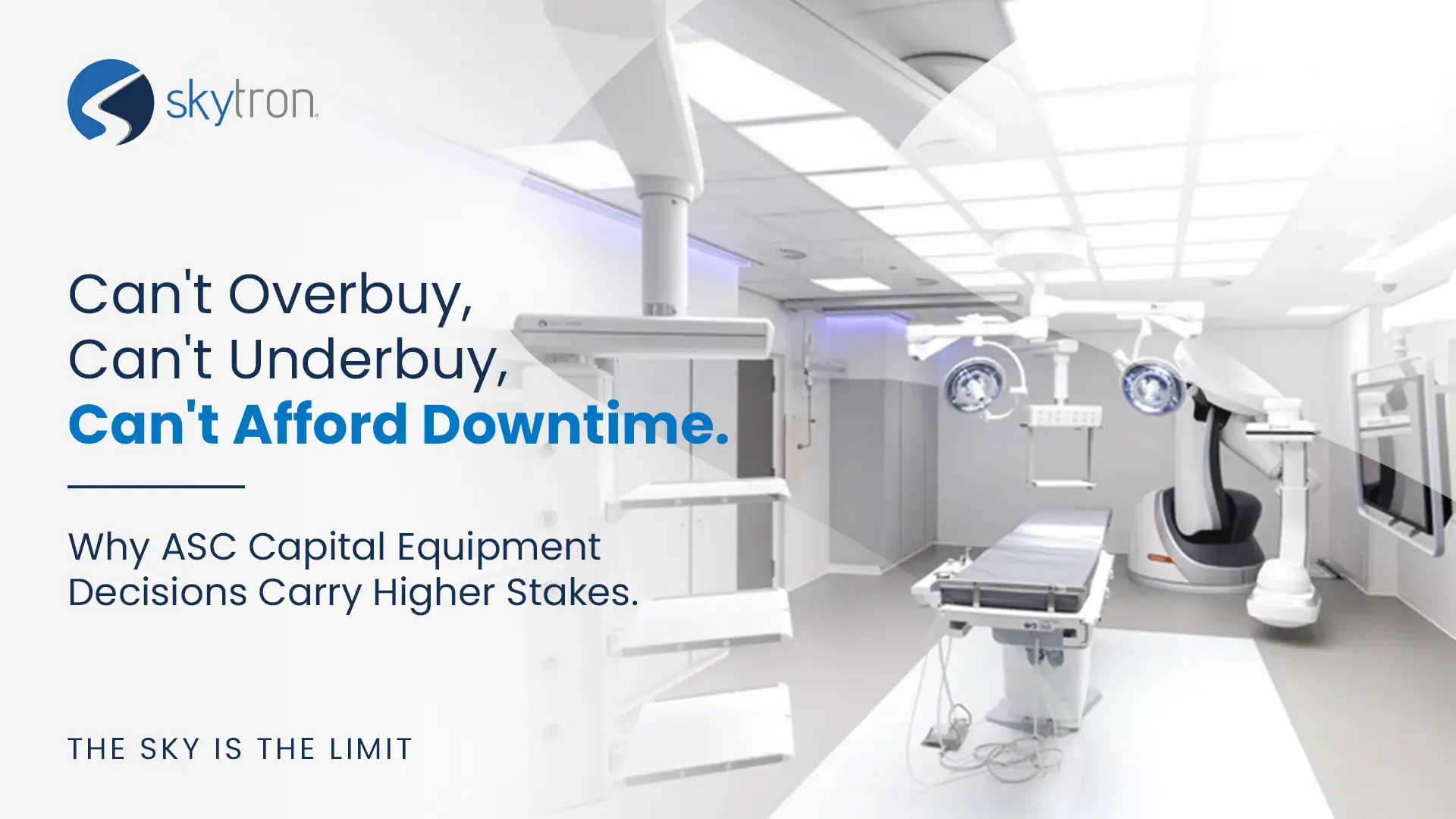
Because in a setting where you can't overbuy, can't underbuy, and can't afford downtime, every piece of equipment has to earn its place.
“In more than half of ASCs, one piece of equipment going down can affect the entire day’s schedule.”
Why ASC Capital Equipment Decisions Carry Higher Stakes
Ambulatory surgery centers continue expanding their procedural capabilities, taking on cases that once required hospital infrastructure, and look different today. But the financial reality of that growth is forcing a different kind of equipment conversation—one where every capital decision carries more weight than it would in a hospital setting.
The challenge isn’t just about choosing the right equipment. It’s about navigating a set of constraints that don’t allow room for error: operating budgets that remain limited compared to hospitals, reimbursement rates that offer no cushion for inefficiency, and facility designs that leave no backup capacity when something goes wrong.
The Capital Planning Tightrope
More than half of all ASCs operate with just one or two operating rooms¹. In these facilities, equipment downtime doesn’t just delay a case—it can derail an entire day’s schedule. With operating room time valued between $46 and $62 per minute², a single hour of unplanned downtime represents $2,760 to $3,720 in lost productivity, before accounting for the downstream effects on patient access and staff utilization.
That operational reality shapes every capital decision. ASCs can’t overbuy—there’s no room in the budget or the facility for equipment that sits idle or serves a narrow function. Operating budgets for surgery centers are climbing, with 43% now exceeding $3 million annually³, but that growth still leaves ASCs working with significantly less financial flexibility than hospitals. Medicare reimbursement for ASC procedures runs 46% lower than hospital outpatient rates for the same services⁴, which means margins stay tight and capital investments carry higher stakes.
At the same time, ASCs can’t underbuy. The procedures they’re performing demand hospital-grade reliability. Equipment that underperforms, requires frequent service, or fails unexpectedly creates both clinical and financial risk in an environment where there’s no backup room to shift cases into and no margin to absorb revenue loss.
Total Cost of Ownership, Not Just Purchase Price
The useful life of medical equipment typically falls between 5 and 15 years, depending on utilization and how well it’s maintained⁵. That range matters in ASC capital planning because the upfront cost is only part of the equation. Service reliability, parts availability, and long-term performance become critical factors when a facility can’t afford frequent replacements or extended downtime.
Industry guidance reinforces this shift in thinking. Capital purchases in ASCs should be evaluated based on return on investment, efficiency gains, safety impact, and the ability to support service line expansion⁶—not just initial cost. Equipment decisions become strategic choices about how a facility will operate and grow, not just what it needs to function today.
The Bottom Line
ASCs are navigating a capital planning paradox: they need equipment that performs at hospital standards while operating under tighter financial constraints and with less infrastructure redundancy. The facilities doing this well aren’t just buying equipment—they’re making strategic investments in reliability, longevity, and operational continuity.
Because in a setting where you can’t overbuy, can’t underbuy, and can’t afford downtime, every piece of equipment has to earn its place.
Manufacturers responding to this reality are designing with ASC operational constraints in mind. Skytron’s approach to capital equipment prioritizes reliability—ensuring equipment performs consistently so clinical teams can focus on patient care rather than troubleshooting. Versatility across procedure types reduces the need for specialized equipment that sits idle between cases. And cost savings extend beyond purchase price to include factors like reduced utility consumption, lower chemical use, and faster OR turnover—all elements that directly impact an ASC’s operating margin. From clinical equipment and infection prevention to clinical business intelligence and architectural solutions, the focus remains on infrastructure investments that support both today’s cases and tomorrow’s growth.
Sources
1. ASC Data. ASC Data Industry Overview. August 2025.
2. Saul, Michael, et al. Assessing Root Causes of First Case On-Time Start Delays. PubMed Central, 2022.
3. Becker’s ASC Review. ASC Operating Budgets Climb. 2023.
4. Medicare Payment Advisory Commission (MedPAC). Ambulatory Surgical Center Services Payment System. March 2025.
5. PubMed Central. Medical Equipment Lifecycle Planning Review. 2022.
6. AORN. Make Your Capital Spending Count. Outpatient Surgery Magazine.